Why Does My Dog Lick and Chew His Paws? (And How to Stop It)
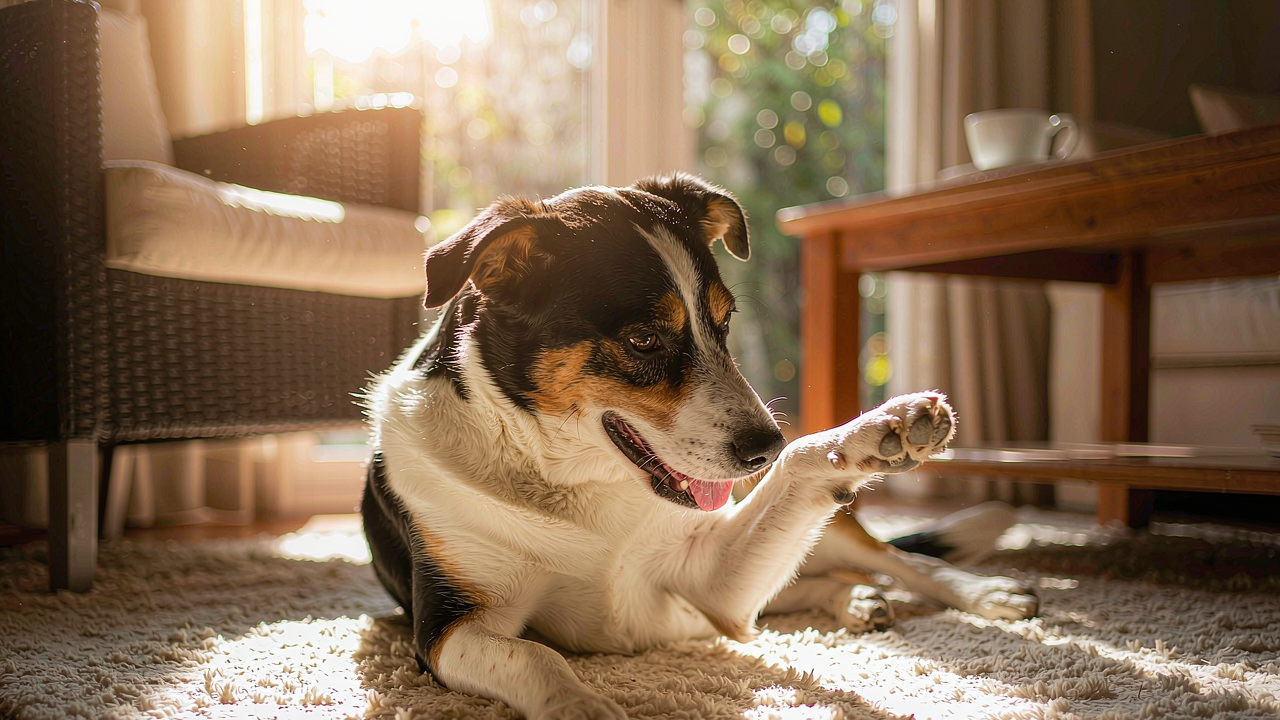
There's a very specific sound — a soft, rhythmic licking that goes on just a little too long — that every dog owner learns to recognize. A quick lick after a walk is normal grooming, the same way a dog will give a paw a clean before settling down to sleep. The problem starts when it becomes constant, intense, or obsessive: when the fur between the toes turns a rusty brown, the skin goes red and raw, and your dog seems to be chewing at their feet like it's a job.
Here's the thing most people don't realize at first: paw licking is almost never the actual problem. It's a symptom. A dog licking and chewing their paws is trying to tell you something is bothering them, and until you find the real cause, the licking won't stop — it'll just keep damaging the skin and making things worse.
The six usual suspects
When a dog starts licking or chewing their paws excessively, the cause almost always falls into one of six buckets. Working through them in order is the fastest way to figure out what's going on.
Allergies — the most common cause by a long way. For a lot of dogs, the paws are the first place allergies show up, because the feet touch grass, pollen, dust, and household cleaners all day long. Environmental allergies tend to flare seasonally — spring pollen or autumn ragweed, for example — while food allergies (usually to a protein like chicken, beef, or dairy) tend to be year-round and often come with itchy ears or a grumbly tummy too. Either way, the itch between the toes drives the licking.
Yeast or bacterial infections. The space between a dog's toes is warm and moist — which is exactly the environment yeast and bacteria love. Infections very often develop as a follow-on to allergies: the dog licks because it itches, the moisture from licking creates a perfect home for yeast, and now you've got two problems. The tell-tale sign of a yeast issue is a distinctive smell — a lot of owners describe it as "corn chips" or slightly stale bread — plus red, inflamed skin between the toes.
Something stuck or injured. A grass seed, a splinter, a small cut, a torn nail — any of these can make a dog suddenly fixate on a single paw. This one is usually easy to spot because it tends to come on fast and stay focused on one foot rather than all four.
Pain or joint trouble. Dogs lick painful spots as a way of soothing them. A senior dog with arthritis will sometimes lick at a sore wrist or ankle joint, and you might notice stiffness or limping alongside the licking. If only one paw is involved and your dog is older, pain is worth ruling out.
Anxiety, boredom, or habit. When medical causes are ruled out, the licking is often behavioral. A dog that's under-stimulated, anxious, or left alone a lot can develop paw licking as a self-soothing habit — and over time it can tip into a genuine compulsion that continues even after the original trigger is gone. Certain breeds seem more prone to this than others.
Dry or irritated skin. Sometimes it's simpler than all of the above. Hot or cold weather, road salt, cleaning products on the floor, or just dry winter air can leave paws irritated and itchy, and the dog responds by licking.
The rusty-brown stain is a clue, not the problem
If you've noticed the fur on your dog's paws turning a reddish or rusty brown, that's not dirt — it's a natural pigment in dog saliva that stains fur when it's wet over and over. Its real value is as a signal: it means the licking has been going on for weeks, not days. When you see that staining, it's time to stop treating it as a quirk and start treating it as something that needs a cause and a fix.
How to narrow it down at home
Start with a close look. Gently check between the toes and around the pads for anything stuck — a grass seed, a splinter, a small cut. Compare the paws to each other: is one swollen, hot, or more red than the others? Does it smell? Is your dog limping or flinching when you touch it?
The pattern matters. Licking on one paw points more toward injury, a foreign body, or pain. Licking on all four paws, or front paws especially, points more toward allergies or an infection. A sudden start is more likely to be something stuck or injured; a slow, gradual build-up is more likely to be allergies or a habit.
There are a few everyday things you can do while you figure it out:
- Wipe paws after walks. A quick wipe with a damp cloth or unscented pet wipe removes pollen, grass, and road chemicals before they have a chance to irritate. This alone helps a surprising number of mildly itchy dogs.
- Keep the paws dry. Moisture between the toes feeds yeast and bacteria, so dry them properly after wet walks or baths — don't leave them damp.
- Add more movement and mental work. If boredom or anxiety is part of the picture, more walks, puzzle toys, and interactive play give the dog something better to do with their mouth. For a lot of dogs, tired means too busy to lick.
- Support the skin from the inside. An omega-3 fatty acid supplement (fish oil) is a well-known way to support the skin barrier and can help with dry, itchy skin. It's not a cure for allergies, but it's a reasonable, low-risk addition.
- Stop the licking while things heal. If the skin is already red or raw, a soft recovery collar or a loose paw wrap at night can break the cycle long enough for the skin to start healing. Otherwise the licking keeps re-opening the damage.
What not to do
A few things tend to make paw licking worse, not better. Don't punish or scold the licking — the dog isn't doing it to be annoying, and punishment just adds stress to a situation that may already be stress-driven. Don't reach for human creams, antihistamines, or ointments on your own — some are unsafe if licked off, and dosing matters in ways that are easy to get wrong. And don't treat the symptom forever without ever finding the cause: a dog that's been licking for months almost always has something underneath it, and masking the itch won't fix it.
When to get help quickly
Some signs mean you shouldn't wait to see if it passes. Same-day vet attention is warranted if a paw is swollen and hot, if there's bleeding or an open wound, if your dog can't walk or is limping, if there's a foul-smelling discharge, or if you see red streaks running up the leg — that last one can signal an infection spreading. Fever, lethargy, or a dog that's clearly in pain alongside paw problems all justify a prompt visit too.
For the slower, itchier cases, a vet can help identify whether you're dealing with an allergy, an infection, or something behavioral, and build a plan around the actual cause. That might mean a diet trial, an anti-itch treatment, a medicated wash, or a behavior plan — but it'll be aimed at the root of it, not just the licking itself.
The bottom line is reassuring: paw licking is common, and in the vast majority of cases it's very treatable once the cause is found. The trick is not to wait until the paws are raw and the habit is baked in. Catch it early, wipe those feet after walks, and let a vet help you sort the why.
Has your dog ever gone through a paw-licking phase — and what turned out to be the real cause, allergies, a grass seed, or just plain boredom? I'd love to hear what finally stopped it.
This article is for informational purposes only and is not a substitute for professional veterinary advice, diagnosis, or treatment. Always consult a licensed veterinarian if your pet shows signs of illness, injury, or distress. If you believe your pet is experiencing a medical emergency, contact your veterinarian or the nearest emergency animal hospital immediately.
🐾 Enjoyed This Article?
Save it for later, share with a fellow pet parent, or check out more tips on our homepage!
📩 Never Miss a Tip
Get our best pet care hacks delivered straight to your inbox. No spam, unsubscribe anytime.