New Kitten Checklist: What to Buy Before Bringing a Kitten Home
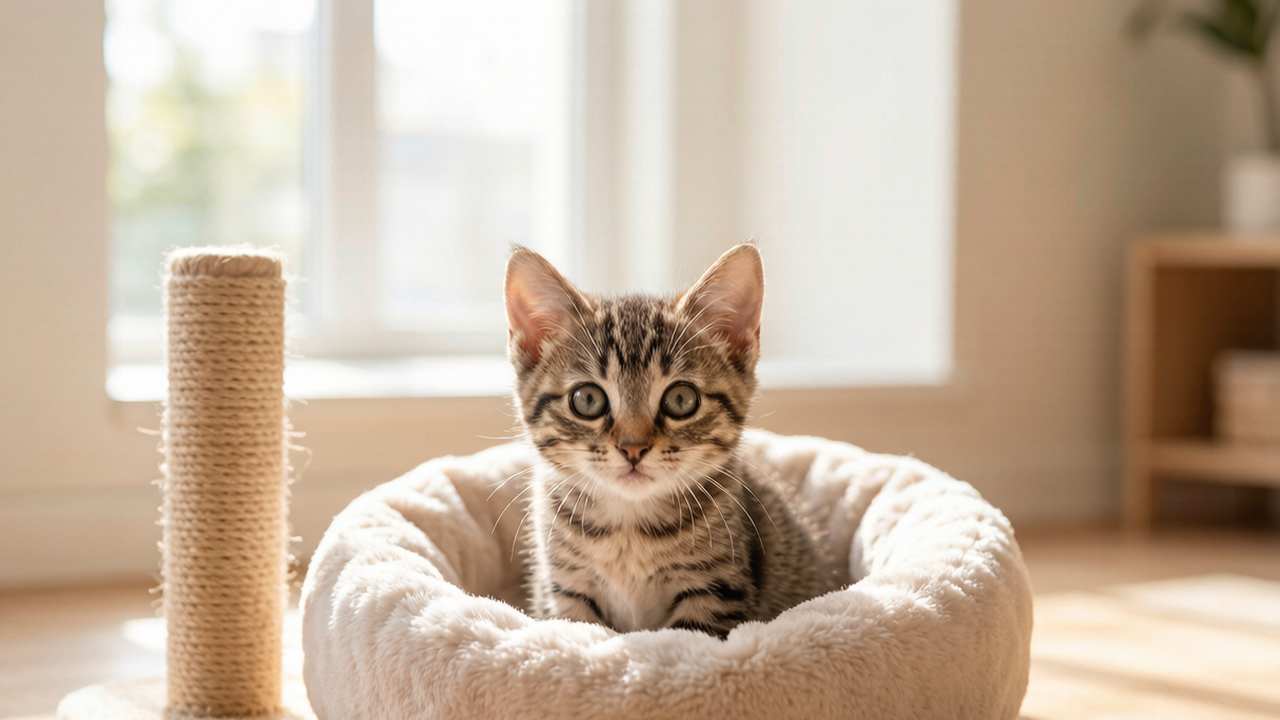
Bringing home a kitten is one of the few things in life that's equal parts thrilling and secretly stressful. You picture the tiny paws and the first purr, and then you stand in the pet store aisle realizing you have no idea which of these fifty things you actually need today versus which ones are a waste of money. It's easy to walk out with a cart full of stuff and still miss the one thing that matters most.
The fix isn't a bigger budget — it's a shorter list. A kitten doesn't need half of what the store would like you to believe. Here's what genuinely matters, what can wait, and how to set up your home so day one goes smoothly instead of sideways.
What to Buy Before Pickup Day
The goal is simple: everything your kitten needs to eat, drink, go to the bathroom, sleep, travel, and stay safe. That's it. If an item doesn't fit one of those buckets, it can probably wait.
Kitten food — not adult food. This is the one most people get wrong. Kittens grow fast and need a formula made specifically for growth, with more calories and the right balance of nutrients. Start with whatever the kitten has already been eating if you can, and change gradually if you need to switch. Sudden food changes are a reliable way to trigger an upset stomach in a tiny animal.
Shallow, easy-to-clean bowls. Stainless steel or ceramic, wide enough that their whiskers don't bump the sides. Skip plastic — it's harder to keep truly clean and some cats react to it. Put water somewhere away from the food; cats often drink more when the two aren't side by side.
A low-sided litter box. A tiny kitten needs to be able to climb in and out without a running start. A big, high-walled box that's perfect for an adult cat can be a genuine barrier for an eight-week-old. Start low and simple.
The right litter. For very young kittens just figuring the whole thing out, an unscented, non-clumping litter is the safest choice. Clumping litter is fine later — once a kitten is a couple of months old and reliably using the box — but early on, non-clumping is the safer bet. And skip heavily scented litter entirely; a kitten's nose is far more sensitive than yours.
A scoop and a place for waste. This one's obvious but easy to forget in the excitement. Have a scoop next to the box from day one, and clean it daily. A kitten will snub a dirty box surprisingly fast.
A secure carrier. Not optional. You'll need it for the ride home and every vet trip after. A hard-sided or well-structured carrier is worth it — it protects a small body in the car in a way a cardboard box simply doesn't.
A quiet place to sleep. This can be a soft bed, a folded blanket, or a crate mat tucked in a corner. It doesn't need to be fancy; it needs to be warm, washable, and somewhere they can retreat to when everything gets to be too much.
One scratching surface. A small post or a flat cardboard scratcher is enough to start. Put it somewhere they actually hang out. It gives them a legal place to scratch before they decide your couch is the obvious choice.
A few simple toys. Wand toys for supervised play, soft balls, and something light they can bat around. You don't need the entire aisle. A bored kitten will invent toys out of your shoelaces, so a few good ones are plenty.
Enzyme cleaner and paper towels. Accidents will happen, even with a well-set-up kitten. An enzyme-based cleaner actually breaks down the smell so they don't come back to the same spot. Regular cleaner just masks it.
What Can Wait
Some things are genuinely nice to have later — once you know your kitten's size, personality, and habits:
- Automatic feeders, water fountains, and self-cleaning boxes. Tempting, but a kitten doesn't need them and you don't yet know what your kitten will actually like.
- A giant cat tree. A small scratcher and a safe climbing spot are enough to start. The big tree can come when you know whether your kitten is a climber or a couch potato.
- Lots of treats and extra foods. Go slow. Too many new foods at once makes it impossible to tell what caused a stomach upset.
- Costumes, fancy beds, and advanced puzzle toys. These are for you, not the kitten. Save the money.
Setting Up the First Room
Kittens do best when they start small. Pick one quiet room — a bedroom, office, or bathroom works — and set it up as their base camp: food and water in one corner, the litter box as far from the food as possible, a bed in a quiet spot, and a scratching surface nearby.
Then, here's the part people rush: don't force the introduction. Sit on the floor, talk softly, and let the kitten come to you. Some kittens walk in like they own the place; others need a day or two (or more) to feel brave. Both are completely normal. The goal for the first week isn't affection — it's trust.
Kitten-Proofing Before They Arrive
Kittens are basically tiny, fast-moving toddlers with claws and a talent for squeezing into places you didn't know existed. A quick pass through the house before pickup saves a lot of panic later:
- Cords and cables — tuck them away or cover them. Kitten teeth and electrical wires don't mix.
- Small objects — anything small enough to swallow gets picked up off the floor, including hair ties, rubber bands, and stray batteries.
- Plants — a surprising number of common houseplants are toxic to cats. Move anything questionable out of reach or check before you bring the kitten home.
- Windows and balconies — make sure screens are secure and gaps are closed. A curious kitten will absolutely test them.
- Cleaning supplies and medicines — locked away, out of reach, always.
The First Vet Visit
Even a kitten from the best home needs a vet check soon after arrival, especially if you don't have complete records. The first visit usually covers a general exam, a conversation about vaccines, deworming, and parasite prevention, and a plan for spaying or neutering down the line. Bring whatever papers you have, and write down your questions ahead of time — you'll forget half of them in the moment.
Kittens typically start their vaccine series around six to eight weeks with boosters after that, but the exact schedule depends on the kitten and where they came from. Your vet is the one who sets that plan, not the internet.
The Mistakes That Cost New Owners the Most
Buying adult-cat supplies for a kitten. High-sided litter boxes, oversized collars, and adult food are the big three. A kitten needs kitten-sized everything.
Forgetting enrichment. A kitten with nothing to do will find something to do — usually at your expense, and often at 3 a.m. A few toys and some daily play are not optional; they're how you protect your sleep and your curtains.
Going too big, too fast. A huge haul of food, treats, and gadgets on day one makes it harder to tell what's working and what isn't. Start lean, then add.
Assuming "cat-safe" means "kitten-safe." Kittens chew more and fit into smaller spaces than adult cats. Supervise new toys, and remove anything with loose strings or pieces small enough to swallow.
The Bottom Line
The real new-kitten checklist is shorter than the store wants you to think: kitten food, shallow bowls, a low litter box with unscented non-clumping litter, a scoop, a carrier, a bed, a scratcher, a few toys, and enzyme cleaner. Everything else can wait until you actually know your kitten.
Set up one quiet room, kitten-proof the obvious hazards, book the first vet visit, and then — here's the hard part — slow down. A kitten doesn't need a perfectly stocked house on day one. They need a safe, warm, predictable place to land while they figure out that you're their person.
What's the one thing you wish someone had told you before you brought your first kitten home? Drop it in the comments — the next first-timer will thank you.
---
If you found this helpful, you might also like:
- How to introduce a new cat to your home
- Why is my cat hiding all day?
- Cat not using the litter box: reasons and fixes
- The complete cat care guide
This article is for informational purposes only and is not a substitute for professional veterinary advice, diagnosis, or treatment. Always consult a licensed veterinarian if your pet shows signs of illness, injury, or distress. If you believe your pet is experiencing a medical emergency, contact your veterinarian or the nearest emergency animal hospital immediately.
🐾 Enjoyed This Article?
Save it for later, share with a fellow pet parent, or check out more tips on our homepage!
📩 Never Miss a Tip
Get our best pet care hacks delivered straight to your inbox. No spam, unsubscribe anytime.
Shop pet supplies on Amazon & Chewy
Comparing prices before you buy? Check current deals and read reviews from other pet owners.