My Dog Spit Out 14 Pills Before I Figured This Out — The Medication Trick That Finally Worked
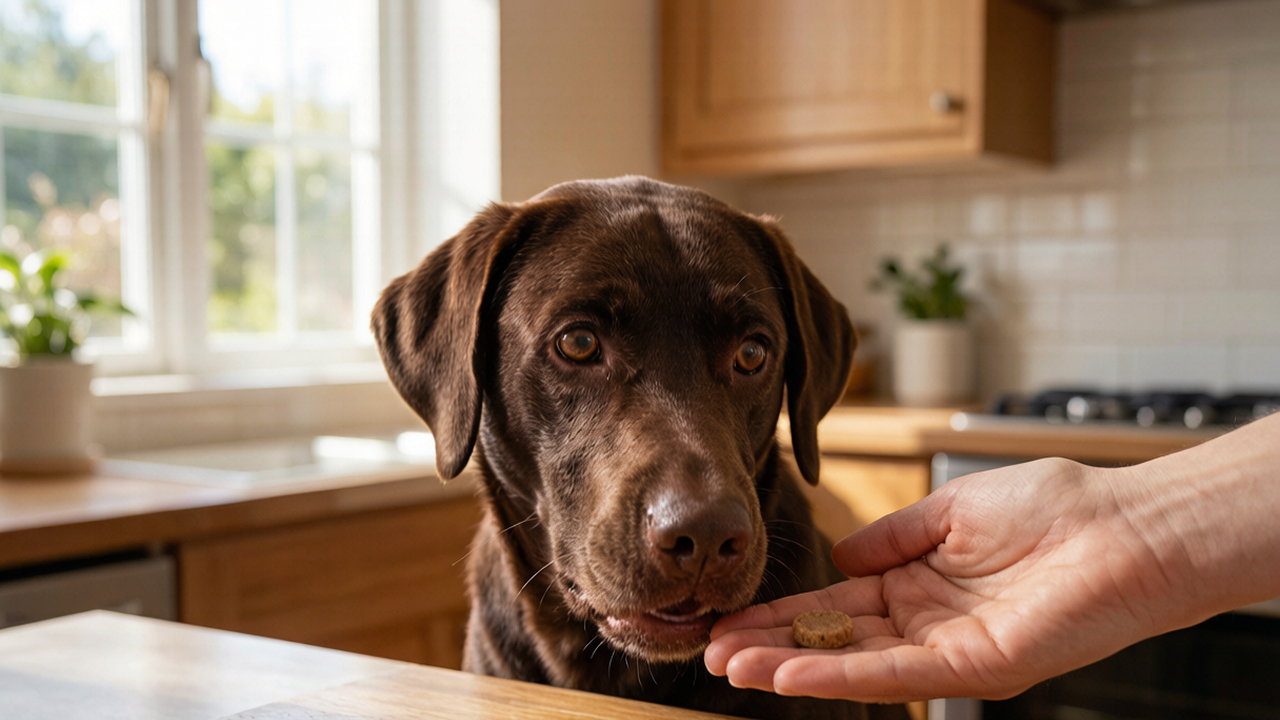
Cooper needed antibiotics. Three capsules a day for ten days. The vet handed me the bottle, gave me that sympathetic look that says "good luck," and sent us home.
That first dose took 45 minutes.
I tried hiding it in cheese — he ate the cheese, spit out the pill. I tried peanut butter — same thing, tongue worked like a sorting machine, pill ejected. I tried wrapping it in deli turkey — he unwrapped it with surgical precision, left the pill glistening on the kitchen floor like a tiny insult. By day three, I'd gone through an entire pack of cheese slices, half a jar of peanut butter, and most of my sanity, and Cooper had successfully avoided roughly 14 pills while consuming a frankly impressive amount of human food.
What finally worked wasn't any of the "genius hacks" I found online. It was a combination of things I had to figure out through trial and error. Here's what I wish someone had told me before I wasted a week's worth of groceries trying to medicate my dog.
Why Dogs Are Weirdly Good at Detecting Pills
Before we get to what works, let me tell you something that made me feel slightly less incompetent: dogs aren't just being stubborn. Their noses have up to 300 million olfactory receptors — humans have about 6 million. They can smell the medication inside whatever food you're hiding it in, even if you can't.
My vet explained this when I called her, slightly hysterical, on day four. "He can smell it through the cheese," she said. "You need to either mask the smell completely or make it not matter that he knows it's there."
That second option — "make it not matter that he knows it's there" — is the approach that ended up working. More on that in a minute.
What I Tried First (And Why Most of It Failed)
The Cheese Method
Classic. Works for roughly 60% of dogs, according to my completely unscientific survey of every dog owner I've ever met. Cooper is apparently in the 40%. The problem with cheese is that it doesn't grip the pill — the pill slides around and the dog can push it out while chewing. If your dog gulps food without chewing, cheese might work for you. If your dog is a thoughtful eater who savors every bite (Cooper's approach to literally everything), cheese is a coin flip.
The Peanut Butter Ball
Same problem as cheese but messier. Cooper would lick the peanut butter off the pill, then deposit the now-peanut-butter-flavored-but-still-intact pill on the floor. I admire the technique, honestly.
The "Shove It Down Their Throat" Method
The vet showed me how to do this properly — open the mouth, place the pill at the back of the tongue, hold the mouth closed, stroke the throat. "Most dogs swallow it right down," she said. Cooper did not swallow it right down. Cooper held the pill in his mouth for 30 seconds, waited until I relaxed, then spat it across the room. Some dogs will tolerate this method. Mine treated it as a personal challenge.
The Pill Crusher
Crushing the pill and mixing it into food seems brilliant until you realize two things: first, many medications are extended-release and crushing them changes how they work (or makes them ineffective); second, crushed pills often taste bitter and your dog will refuse the entire bowl of food. I learned the hard way that a dog who's suspicious of his dinner bowl is a dog who's skipping meals entirely.
What Actually Worked (After 14 Failed Attempts)
The "Three-Treat Rapid-Fire" Method — This Is the One
This technique exploits the one thing dogs are terrible at: resisting a rapid stream of treats. Here's how it works:
You need three identical-looking treats. Pill goes in treat #2. Treats #1 and #3 are normal.
The sequence: Give treat #1 (no pill) — your dog inhales it happily. Immediately present treat #2 (pill inside) while already reaching for treat #3 so your dog can see it. The visual of the next treat creates urgency. Most dogs will swallow treat #2 without chewing because they're focused on treat #3 — which you give immediately.
I stumbled onto this by accident when I was frantically trying to give Cooper his medication before work and had a handful of treats. He gulped the pill treat in his rush to get the next one. It's worked roughly 85% of the time since then. The 15% failure rate happens when I fumble the handoff and he has time to think about it.
DIY Pill Pockets That Actually Grip the Pill
Store-bought pill pockets (Greenies Pill Pockets are the most common brand) work for lots of dogs, but Cooper figured them out after three doses. The problem is that commercial pill pockets are uniform — once the dog learns the texture, they know exactly what to expect.
What worked better: homemade meatballs.
Mix a tablespoon of ground beef or canned dog food with a tiny pinch of flour to bind it. Form it around the pill into a tight ball. The key is making it dense enough that the pill doesn't slide out, and cooking it briefly (30 seconds in the microwave or a quick pan-sear) to create a slightly firm exterior. The pill is sealed inside a meatball that smells like dinner. Cooper has yet to detect a single pill using this method.
Another version that works: cream cheese with a sprinkle of bacon bits pressed into the outside. The cream cheese molds tightly around the pill, and the bacon bits on the outside are so distracting that the dog doesn't investigate what's inside. Just don't use too much cream cheese — a teaspoon is plenty for a medium pill.
The Pill Gun — Faster Than Wrestling Their Mouth Open
A pill gun looks like a syringe with a soft tip. Load the pill, insert it into the side of the mouth (behind the canine tooth), push the plunger. It's actually less stressful than the manual method because it's over in half a second. Pill guns cost about $5-10. I keep one as backup — Cooper doesn't love it, but he tolerates it better than me wrestling his mouth open with my fingers.
Butter Coating — The Simplest Trick I Almost Didn't Try
Rub a thin layer of butter on the pill. That's it. The butter masks the medicinal smell and taste, and the slippery texture helps the pill slide down. I was skeptical — it seemed too simple — but it works surprisingly well for smaller pills. For larger capsules, the meatball method is more reliable.
The Mistake That Made Everything Worse: Creating Pill Anxiety
Around day six of the antibiotic saga, I noticed something: Cooper started running away when he saw the cheese package. Not the pill. Not the peanut butter jar. The cheese. The thing he used to get excited about. I had accidentally turned his favorite treats into fear triggers.
This is the part of "giving your dog a pill" that nobody talks about. If every encounter with a treat becomes associated with a stressful experience, you're ruining more than your medication schedule — you're damaging trust.
Here's what I changed:
Separate medication time from treat time. I stopped using his regular treats for pills entirely. The pill went into a special "medication meatball" that was completely different from anything he normally got. Normal treats stayed normal. His cheese and peanut butter privileges were restored and he stopped running away from the fridge.
Stay calm even when it fails. Dogs read your frustration. When I'd get visibly annoyed that he'd spit out the pill for the fifth time, he'd get more anxious, which made the next attempt harder. Now, if the pill trick fails, I take a five-minute break and try again. No sighing, no visible frustration, just neutral persistence.
Praise like crazy after the pill goes down. Even if it took six attempts, the moment the pill is swallowed, I act like he just won Westminster. Treats, belly rubs, the works. The goal is to make the end of the pill experience so rewarding that it outweighs the unpleasant parts.
A Quick Note About Which Pills You Should Never Hide in Food
Talk to your vet before hiding any medication in food. Some medications need to be given on an empty stomach. Some are extended-release and crushing or breaking them changes the dose delivery. Some interact with certain foods — dairy, for instance, can interfere with certain antibiotics.
The antibiotics Cooper was on (amoxicillin/clavulanate) could be given with food, which is the only reason my meatball method was an option. I almost crushed a tablet before our vet told me it was extended-release and crushing it would dump the entire dose into his system at once. That would have been bad.
Always check with your vet. It takes 30 seconds and could prevent a serious problem.
What I Keep in My "Pill Toolkit" Now
After surviving 30 doses of antibiotics (three pills a day for ten days), here's what I always have on hand:
- Ground beef or canned dog food (for DIY meatballs)
- Cream cheese (for quick-wrapping smaller pills)
- A pill gun (for backup when food tricks fail)
- Unsalted butter (for coating)
- High-value treats that are ONLY for post-pill rewards
The total cost for all of this is maybe $15, and it's saved me more time and frustration than I can measure.
The Bottom Line: It's About the System, Not One Magic Trick
If I could go back and tell myself one thing before that first pill attempt, it would be this: there is no single trick that works for every dog every time. What works is having a system — a sequence of methods you try in order, from least invasive to most, without panicking when one fails.
For Cooper, the system is: try the three-treat rapid-fire first (works ~85% of the time), fall back to a meatball (works ~95% of the time for the stubborn 15%), and use the pill gun as a last resort (100% effective, least pleasant for everyone). Knowing I have that sequence means I don't stress when the first method doesn't work, and Cooper doesn't pick up on that stress.
He finished all 30 pills. The infection cleared. And the cheese drawer in my fridge is once again a source of joy rather than suspicion.
What's the most creative (or desperate) thing you've tried to get your dog to take a pill? Did it work, or did your dog outsmart you? Tell me in the comments — I need to know I'm not the only one whose dog can unwrap deli meat.
🐾 Enjoyed This Article?
Save it for later, share with a fellow pet parent, or check out more tips on our homepage!