How to Get Dog Pee Smell Out of Carpet for Good: The Only Method That Actually Worked
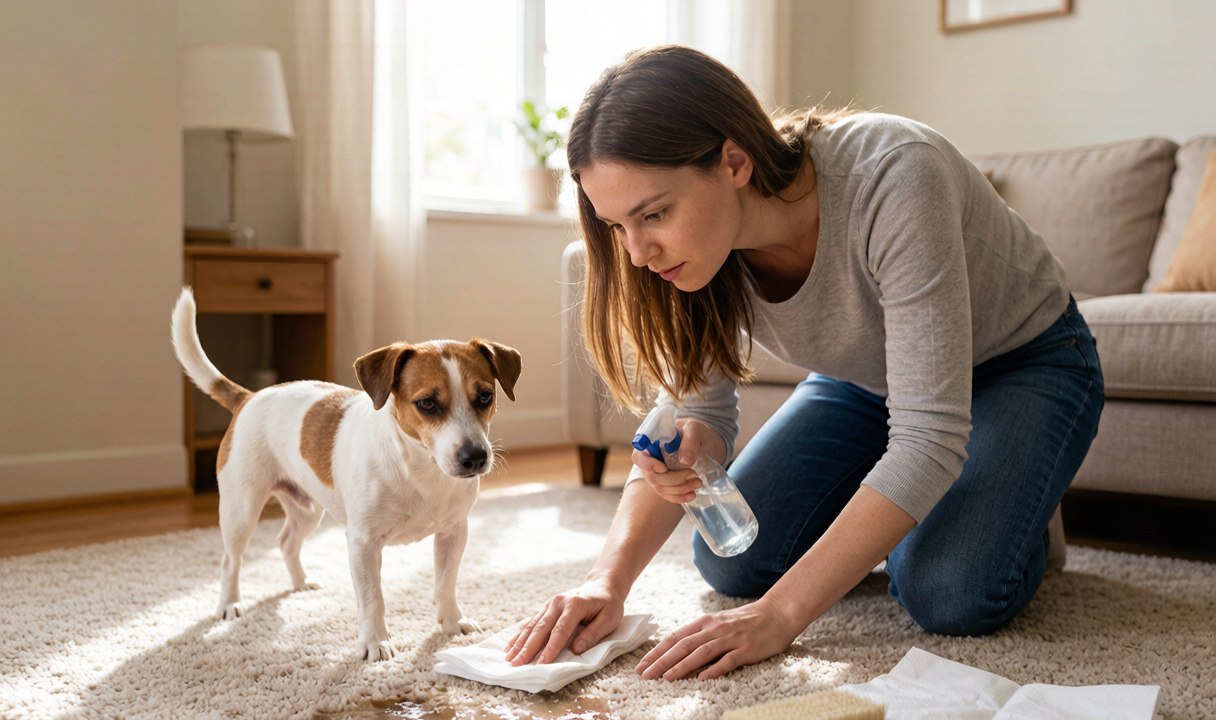
Few things test a dog owner's patience like stepping barefoot into the living room at 7 a.m. and feeling the carpet give way to something warm and suspiciously wet. When it's the third accident of the week, the smell stops feeling like an incident and starts feeling permanent.
Most people work through the usual list first. Baking soda. Vinegar. Store-bought enzymatic cleaners. A borrowed carpet shampoo machine. Each one improves the smell for a day or two, and then it comes back—usually stronger, usually right before guests arrive. There's nothing like greeting a visitor and realizing your house smells like a kennel.
There is a method that actually removes dog pee smell for good rather than masking it, and it comes down to chemistry plus dwell time. Here's exactly how to do it, and why it works.
Why Dog Pee Is So Hard to Get Rid Of
The first thing to understand is that dog urine isn't just liquid you can blot up. It's a combination of uric acid, urea, creatinine, and other compounds that bind to carpet fibers and padding. Worse, as it dries, uric acid crystals form and are reactivated by humidity. That's why the smell returns on rainy days or when the heat kicks on. It isn't your imagination — the odor is literally coming back to life.
Regular cleaners can't break down uric acid. Soap and water might dilute it, but they don't destroy it. Baking soda absorbs odors temporarily. Vinegar neutralizes the ammonia smell for a while. But none of them break the chemical bond that keeps the urine crystals stuck in your carpet.
That's the missing piece. You need something with live enzymes that will actually consume the urine compounds until they're gone.
What You Need Before You Start
Here's the supply list. Most of it is already in the average home, with the exception of the enzymatic cleaner — which is worth buying in bulk if accidents are a recurring problem:
- Paper towels or clean white cloths (a lot of them)
- A wet/dry vacuum or carpet extractor if you have one
- Cold water
- An enzymatic cleaner made for pet urine (not just a deodorizer—read the label)
- A blacklight flashlight (optional but weirdly satisfying)
- Plastic wrap or a damp towel
- Patience
The enzymatic cleaner is the key. Choose one that lists "live bacteria" or "enzyme-producing bacteria" as an ingredient, and look for brands that specifically mention uric acid and stain removal — not just "odor control."
The Step-by-Step Method That Worked
Step 1: Find It All
If you can see the spot, great. But if your dog has been sneaking off to pee in corners, you may not know where all the accidents are. A blacklight flashlight solves that. Turn off the lights at night and walk the room with the blacklight — the carpet will light up like a crime scene, which is unpleasant but tells you exactly where to treat.
Step 2: Blot, Don't Rub
When the accident is fresh, grab a thick stack of paper towels and blot — really blot. Put pressure on the spot with your foot over a towel and hold it there for a full minute. Rubbing pushes the urine deeper into the fibers and spreads it out. Blotting lifts it out.
Keep blotting until the paper towels come up almost dry. If the spot is already dry, skip straight to the next step.
Step 3: Rinse with Cold Water
This is the opposite of most people's instinct. Hot water seems like it should clean better, but it actually sets both the stain and the smell. Cold water is what you want.
Pour a small amount of cold water onto the spot—just enough to rewet the area without soaking the pad underneath. Then blot it up again with clean towels, and repeat two or three times. The goal is to dilute the urine and pull out as much as possible before the enzyme cleaner goes to work.
Step 4: Apply the Enzymatic Cleaner Generously
This is where most people go wrong for months: spraying the cleaner like air freshener. A light mist doesn't work. The enzymes need to reach the same depth as the urine. If the pee soaked into the carpet pad, the cleaner has to soak into the carpet pad too.
Saturate the spot — really wet it, until the area is damp to the touch. Follow the instructions on the bottle; most call for 10 to 15 minutes of dwell time, some longer. For a bad smell, an hour is a safer bet.
Step 5: Cover It and Let It Work
This is the step most guides leave out. After applying the enzymatic cleaner, cover the spot with plastic wrap or a damp towel. That keeps the area moist longer, which keeps the enzymes active. Enzymes slow down as they dry out, so a damp spot gives them more time to break down the urine.
Leave it covered for 24 hours. For a deep stain, reapply and cover again for another day. It sounds like a long wait, but two days beats two months of lingering odor.
Step 6: Blot and Let It Dry
After the waiting period, remove the plastic wrap and blot up any excess moisture. Then let the carpet air dry completely. Don't rush this with a hairdryer — heat can reactivate odors and damage carpet fibers. A fan in the room is fine; direct heat on the spot is not.
Once it's dry, do a sniff test. If the smell is gone, you're done. If anything lingers, repeat the process. A badly soaked spot can take three rounds, but it does eventually clear.
What About Old, Set-In Stains?
Old stains are harder, but not impossible. The same method applies — just let the enzymatic cleaner sit longer, sometimes a full 48 hours. For really old stains, run a carpet extractor over the area first to flush it before applying the enzyme cleaner. The extractor pulls out deep-down urine that blotting can't reach.
One critical warning: don't use regular carpet shampoo before the enzymatic cleaner. Some shampoos leave a residue that kills the enzymes. If you shampoo, do it after the smell is gone, not before.
Prevention: The Part Nobody Wants to Talk About
Getting the smell out is only half the battle. The other half is stopping it from happening again. Repeat indoor accidents are frequently medical rather than behavioral — a urinary tract infection is one of the most common culprits, and the accidents often stop once it's treated. So if your dog suddenly starts peeing in the house, call your vet first. If potty training is part of the challenge, we have a complete potty training guide with a step-by-step plan that works for puppies and adult dogs alike.
On the management side: take your dog out more often, especially first thing in the morning and right before bed. Pick up the water bowl about two hours before bedtime. A waterproof mat under the dog bed is cheap insurance.
For trips in the car or visits to someone else's house, a belly band prevents new accidents in places you can't properly clean. It doesn't solve the underlying problem, but it buys you time while you work on it.
The Bottom Line
Dog pee smell doesn't have to be permanent. The key is using the right product the right way: cold water first, enzymatic cleaner second, plenty of dwell time, and no heat. Skip the vinegar for deep stains. Skip the regular carpet shampoo until the smell is actually gone. And if the accidents are new or frequent, call your vet before you blame your dog.
Done properly, this process ends the kennel smell rather than postponing it, and it works on carpet that other methods have already failed on. While you're tackling carpet issues, you may also want our guide on how to get dog hair out of carpet without a vacuum — because pee isn't the only thing dogs leave behind.
If a stain has survived multiple cleanings, the odds are the treatment was too shallow or dried out too fast, not that the carpet is beyond saving. Saturate deeper, cover the spot, and give the enzymes the full 24 to 48 hours before you decide it hasn't worked.
Frequently Asked Questions
- 1. Why does dog pee smell keep coming back even after cleaning?
- Dog urine contains uric acid crystals that embed deep into carpet fibers and padding. Most household cleaners only remove the surface liquid but can't break down these crystals. When humidity rises, the crystals reactivate and release the smell all over again. That's why the odor seems to disappear for a day or two and then returns.
- 2. Can I use vinegar instead of an enzymatic cleaner?
- Vinegar can temporarily neutralize the ammonia component of urine, which helps with fresh stains. But for deep-set or old stains, vinegar won't break down uric acid crystals the way enzyme-based cleaners do. That's why a hallway can still smell like pee on humid days even after an entire bottle of white vinegar. If the stain is fresh and surface-level, vinegar can be a decent first step — but for anything that's soaked into the pad, switch to an enzymatic cleaner.
- 3. What's the fastest way to remove old, set-in dog pee from carpet?
- Saturate the area with an enzymatic cleaner, cover with plastic wrap to keep it moist (enzymes need time and moisture to work), and let it sit for 24-48 hours. If the padding underneath is soaked, use a carpet extractor to flush the area first. Don't use heat or carpet shampoo before the enzymes have done their job — shampoo residue can kill the bacteria that break down the urine.
Shop enzymatic pet urine cleaner on Amazon & Chewy
Comparing prices before you buy? Check current deals and read reviews from other pet owners.