How to Give a Cat a Pill Without Getting Scratched: A Step-by-Step Guide
There are few tasks in pet care that humble a grown adult faster than trying to get a pill into a cat. One minute you're holding a tiny tablet and a treat; the next, your cat has vanished under the bed, and you're bleeding from three places you didn't know could bleed.
The good news: giving a cat medication doesn't have to be a wrestling match. There are ways to do it that are calmer for the cat and safer for your hands, and most of them come down to preparation, patience, and knowing when to get clever.
Start Before You Touch the Cat
The biggest mistake people make is grabbing the cat first and figuring out the rest on the fly. Instead, get everything ready before the cat even knows what's happening.
Know the medication. Is it a tablet or a capsule? Does it need to be given with food or on an empty stomach? Can it be crushed, or must it stay whole? Some pills are slow-release or coated, and crushing them changes how they work — sometimes dangerously. Never crush, split, or mix a pill into food unless your vet has told you it's safe. When in doubt, ask first.
Gather your supplies: the pill, a small amount of something tasty, a little water or a syringe if you have one, and a treat for afterward. Work in a quiet room with the door closed, and keep your movements slow. Cats read tension like a billboard, and a hurried, stressed owner makes a stressed cat.
The Easiest Route: Hide It in Food
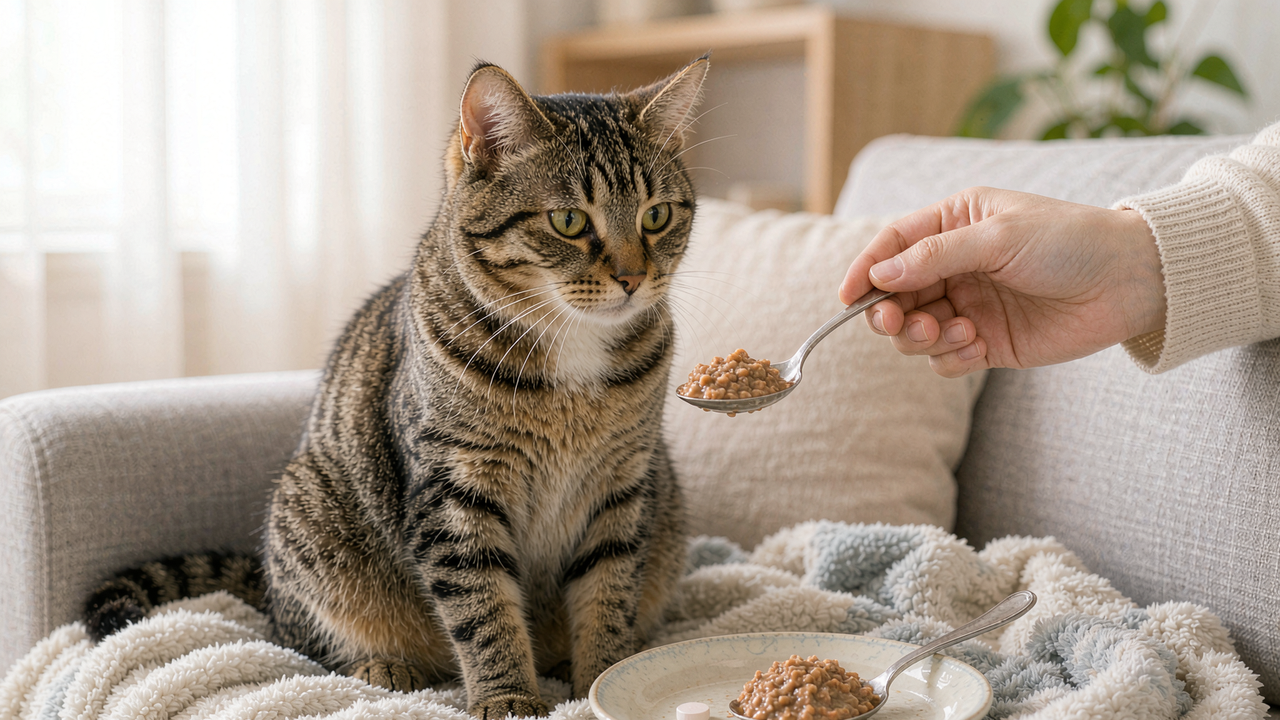
If the medication can be given with food, hiding it is almost always the least stressful option — for both of you. The trick is to use a small amount of something your cat genuinely loves, so the whole dose goes down before he has a chance to investigate.
Strong-smelling, soft, high-value foods work best: a spoonful of wet food, a lickable puree treat, or a dab of something soft enough to wrap around the pill. Offer a tiny plain taste first, before any medicine is involved, so you know he's into it. Then give the pill hidden in a small bite, and only offer the rest of the meal once that bite is gone.
Two rules here. First, keep the portion small. If you bury the pill in a full bowl of food and he walks away halfway through, you'll never know whether he actually got the dose. Second, don't let him watch you prepare it. Cats are suspicious by profession, and a cat who sees you fussing with his food will sniff out the plot.
When Food Fails: The Direct Method
Some cats are too smart, or simply refuse to eat on a schedule, which means the pill has to go in directly. This is doable, and it's less scary than it looks once you know the steps.
Position your cat so he can't back away — sit him on a non-slip surface with his rear against your body or a wall. If you have a second person, one of you holds and one of you gives the pill; if you're solo, it's still manageable with practice.
Gently hold his head from above with your non-dominant hand, fingers on his cheekbones. Tilt his head back slightly. Use your other hand to ease his lower jaw open — a finger on his front teeth works, but stay away from the long canine teeth, because that's exactly where a cat will hook you. Drop the pill as far back on his tongue as you can, then close his mouth and hold it shut for a moment while you stroke his throat downward to encourage swallowing.
Watch for the tell. If he licks his lips or nose afterward, the pill probably went down. If he spits it out, take a breath, reset, and try again. Rushing a second attempt while you're both rattled is how scratches happen.
Tools That Make It Easier
For cats who use their teeth as a first language, a pill popper — a small plunger device that places the pill near the back of the tongue — keeps your fingers out of the bite zone entirely. It takes a couple of dry runs to get the hang of, but it's a genuinely useful tool for the squirmy or mouthy cat.
For a cat who fights with all four paws, the towel wrap — sometimes called a "cat burrito" — keeps the claws contained. Lay a towel flat, place the cat in the middle, and fold the sides around his body so only his head is free. It sounds fussier than it is, and it transforms a flailing cat into one you can actually hold. Use it as a last resort, and keep the tone calm, because some cats find being wrapped stressful no matter how gentle you are.
What Not to Do
A few habits make the whole thing harder and riskier:
- Don't force a pill down a struggling cat's throat with your fingers. That's how both of you get hurt, and how a cat learns to fight harder next time.
- Don't crush or mix a pill unless your vet has told you it's safe. Slow-release and coated medications exist precisely so they don't release all at once.
- Don't hide medication in a full meal. If the dose isn't finished, it's wasted.
- Don't skip doses or stop early because it's a battle. If it's truly a daily fight, that's a signal to talk to your vet about alternatives — not a reason to give up on the medication.
And take cat bites seriously, especially on the hands. If a cat bites hard or scratches deep, clean the wound and get it checked. Cat mouths carry bacteria that can turn a small puncture into a real infection.
Timing Matters More Than You'd Think
Pick your moment. Give medication at a time when the house is calm and your cat is already relaxed — not right after a doorbell startle, and not when you're rushing out the door. Doing it at roughly the same time each day builds a routine, and cats are creatures of routine; over time, "pill time" becomes just another predictable part of the day instead of a surprise ambush.
Keep the whole thing short and boring. The longer you fuss, the more your cat's patience drains, and a cat who's hit his limit is a cat who scratches. Get in, get it done, and follow with something he likes. A quick treat, a chin scratch, or a few minutes of quiet space — whatever tells him the scary part is over and nothing bad followed it.
When to Ask for an Easier Version
Here's the thing a lot of owners don't realize: you're not locked into whatever form the medication came in. Many drugs have alternatives — a liquid, a flavored version, a topical gel you rub on the ear, or even a long-acting injection given at the clinic. If you've tried and the pill just isn't happening, tell your vet. You're not "failing"; you're having the exact problem vets hear about constantly, and there's usually another option.
The Bottom Line
Giving a cat a pill is a skill, and like most skills, it gets dramatically easier with a little preparation and a lot of calm. Hide it in food when you can. Use a pill popper or a towel when you can't. Know your cat's limits and your own, and don't be shy about asking the vet for a form of the medication that doesn't require a small miracle every single day.
Your cat won't thank you in the moment. But when the medication does its job and he's feeling better, you'll both be glad you stuck with it.
What's your go-to trick for getting a pill into a reluctant cat — and what's the worst scratch you've ever earned trying? Share your war stories in the comments.
This article is for informational purposes only and is not a substitute for professional veterinary advice, diagnosis, or treatment. Always consult a licensed veterinarian if your pet shows signs of illness, injury, or distress. If you believe your pet is experiencing a medical emergency, contact your veterinarian or the nearest emergency animal hospital immediately.
🐾 Enjoyed This Article?
Save it for later, share with a fellow pet parent, or check out more tips on our homepage!
📩 Never Miss a Tip
Get our best pet care hacks delivered straight to your inbox. No spam, unsubscribe anytime.