Moving House With Pets: A Stress-Free Guide
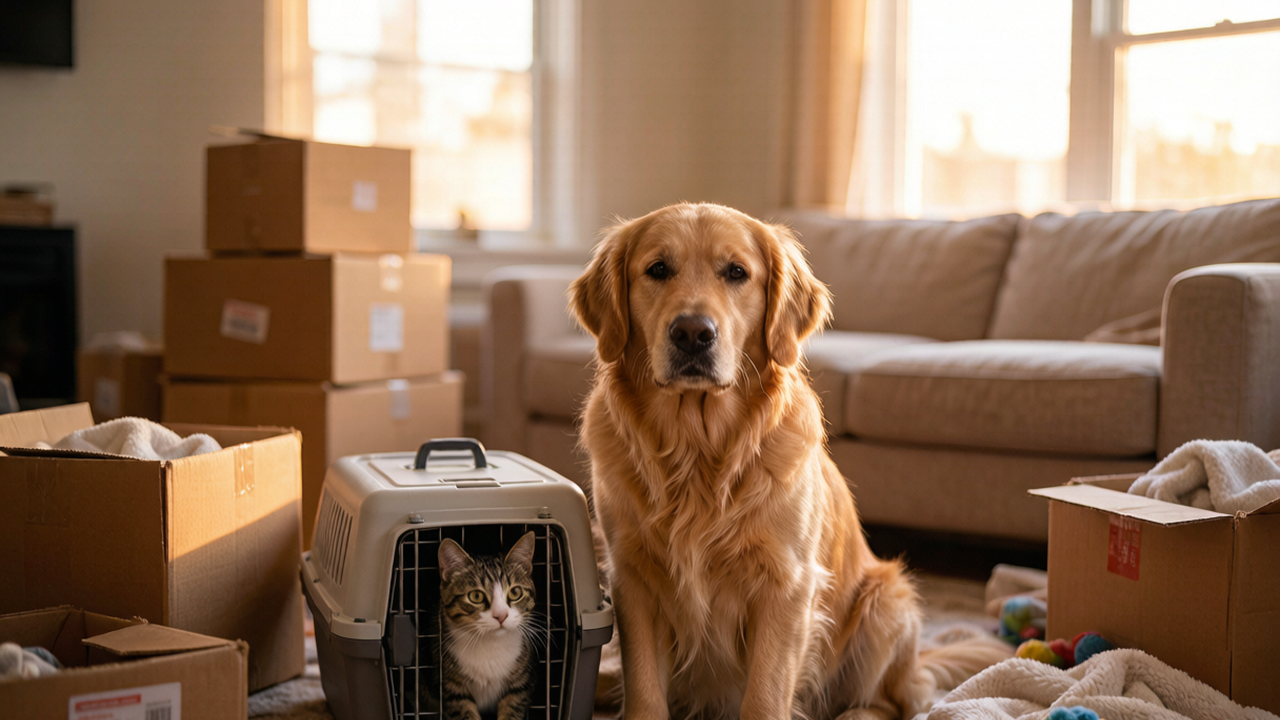
Moving day is chaotic. Movers arrive early, boxes pile up, and pets pick up on every bit of that tension. A cat zipped into a carrier can yowl as if personally betrayed, while a dog may try to wedge itself between your knees for safety.
Cats notice every change. They watch furniture leave, watch their favorite sunbeam spot by the living room window get stripped down to bare hardwood, and somewhere between the dismantled bookshelf and the roll of packing tape, they decide: I am never coming out of this carrier.
Many people assume moving with pets will be the easy part. The hard part, they think, is the couch that won't fit through the doorframe or the security deposit that may not come back. In practice, the pets are usually the hardest part of all.
Most of what matters never makes the standard "moving with pets" checklist — the kind of lesson you only learn after finding a cat wedged behind the water heater.
Here's everything to know before you move with pets.
The Two-Week Countdown That Changes Everything
The biggest mistake? Starting to pack three days before the move instead of two weeks out.
For you, packing means "throw stuff in boxes and label them later." For the cat and dog, it means "everything familiar is disappearing and something bad is definitely happening."
Cats and dogs read their world through routine and scent. When furniture vanishes and cardboard towers appear overnight, their stress response kicks in — cortisol spikes, appetite drops, and for cats especially, the instinct to hide overrides everything else.
Here's the timeline that works:
Week 2 before move: Bring the moving boxes out. Empty. Let them sit in the living room. Most dogs sniff them and move on. Many cats hide under the bed for an hour, then come out and rub their face on a corner. That's normal. Let them claim the boxes as furniture before you start filling them.
Week 1 before move: Pack one room at a time, starting with the least-used space. Keep the bedroom — their safe zone — untouched until the very last day. Each day, spend 10 minutes sitting on the floor with them in whatever room still looks normal. Just existing. Not packing. Just being there.
Three days before: Set up the "pet go-bag." Food for three days, bowls, a couple of favorite toys, a worn t-shirt that smells like you, poop bags, a leash and harness, and a copy of their vet records. This bag doesn't go in the truck. It rides in the car with you.
Moving Day: The Bathroom Strategy
On moving day, a bathroom becomes a command center. Put the dog's bed in the tub (weird, but many dogs like the enclosed feel), set up the cat's carrier with the door propped open, put down a water bowl, and tape a sign to the door: "CAT AND DOG INSIDE. DO NOT OPEN."
The sign matters more than you'd think. With movers walking in and out with furniture for hours, every one of them will leave that door alone if it's clearly marked.
If you don't have a spare bathroom, any small room with a door that closes works. The key is this: the room must be off-limits to movers and contain everything your pets need for several hours. Food, water, somewhere to hide, and something that smells like home.
Check on them every hour. The dog will likely nap through most of it. The cat may stay in her carrier, eyes wide, but as long as she isn't panting or trembling, that's a win.
The Car Ride: How to Get It Right
One genuinely dangerous mistake is letting the dog ride loose in the back seat.
It's easy to do this on short trips to the park, but moving day is different. You're distracted. You're stressed. The car is packed with random stuff. If you brake hard, a 65-pound dog becomes a projectile.
The dog should ride in a crash-tested harness clipped to the seat belt anchor. The cat stays in her carrier, secured with the seat belt threaded through the handle. Cover the carrier with a light blanket — seeing scenery whip past the window at 60 mph does not calm a cat down.
Drive gently. No sudden braking, no sharp turns. The goal is to get there without your pets associating the car ride with terror.
The First 48 Hours in the New House
This is where things most often go wrong.
Opening the cat's carrier in the living room and assuming "she'll explore when she's ready" is a recipe for trouble. A frightened cat can bolt the instant the door opens and end up wedged somewhere you'd never expect — behind the water heater, under a bookshelf, or inside a closet.
Luring her out takes a can of tuna, patience, and sitting quietly near where she's hiding. Don't chase her; let her come to the smell on her own terms.
Here's what to do instead:
Start with one room. Before you let your pets explore the whole house, pick one room and set it up exactly like their old safe space. Same bed, same bowls, same toys, same blanket that hasn't been washed. Close the door. This is their base camp for the first 24-48 hours.
For a nervous cat, put the carrier in a small room — a bathroom or spare bedroom — open the door, and just sit there quietly for 30 minutes. No unpacking, no noise. Just her and the familiar smell of her blanket.
Walk the dog on a leash inside the house first. Before letting him roam free in the new yard, walk him through every room on a leash. Let him sniff baseboards, doorframes, the spot where the previous owner's dog probably napped. Dogs map the world through scent, and a leash walk indoors gives them a structured way to process "this is ours now."
Don't wash anything that smells like the old house. Washing the dog's bed the day after moving in is a big mistake. That bed smelled like home. Stripping that scent away in a house that already smells unfamiliar just adds to the disorientation. Wait at least two weeks before deep-cleaning pet bedding.
The Two-Week Adjustment Window
A cat may not eat for the first 36 hours. Sit next to the carrier with wet food — the stinkiest kind you can find — and eventually, often at 2 AM on the second night, she'll creep out and eat.
That's actually normal. Cats can take anywhere from a few days to a few weeks to fully accept a new home. The key signs to watch for:
- Eating and drinking within 48 hours. If a cat goes beyond 48 hours without eating, it can develop hepatic lipidosis — a dangerous liver condition. That's a vet visit, not a wait-and-see.
- Using the litter box. Most cats use theirs by day two. If she hasn't by day three, worry about a stress-induced urinary issue.
- Coming out during daylight hours. Many cats go nocturnal for the first week — exploring at 3 AM when the house is silent. That's fine. The first time she walks through the living room at 2 PM, you'll know you've turned a corner.
The dog adjusted faster — dogs tend to — but he was clingy. He followed his person from room to room for the first five days, like he was afraid they'd disappear into a moving truck. Let him. Don't gate him out of rooms or tell him to go lie down. He needs the reassurance.
What to Remember When Moving With Pets
Pack the pet stuff last. Unpack it first. Don't wash the blankets. Keep them in one room for the first day. Walk the dog through the house on a leash before letting them loose in the yard. And for cats — close every small gap you can find, because they will find the one you missed.
Most of all: give yourself some grace. Moving is one of the most stressful things humans go through. Your pets pick up on that stress, and their weird behavior — the hiding, the clinginess, the refusal to eat — isn't them being difficult. It's them processing a world that just got completely rearranged.
Cats eventually claim a new sunbeam spot by the kitchen window. Dogs figure out within a week that the new neighborhood has better squirrels. And six months later, neither of them seems to remember the old house at all.
With patience and a predictable routine, most pets settle into their new home within a few weeks.
This article is for informational purposes only and is not a substitute for professional veterinary advice, diagnosis, or treatment. Always consult a licensed veterinarian if your pet shows signs of illness, injury, or distress. If you believe your pet is experiencing a medical emergency, contact your veterinarian or the nearest emergency animal hospital immediately.
🐾 Enjoyed This Article?
Save it for later, share with a fellow pet parent, or check out more tips on our homepage!
📩 Never Miss a Tip
Get our best pet care hacks delivered straight to your inbox. No spam, unsubscribe anytime.
Shop pet calming aid on Amazon & Chewy
Comparing prices before you buy? Check current deals and read reviews from other pet owners.