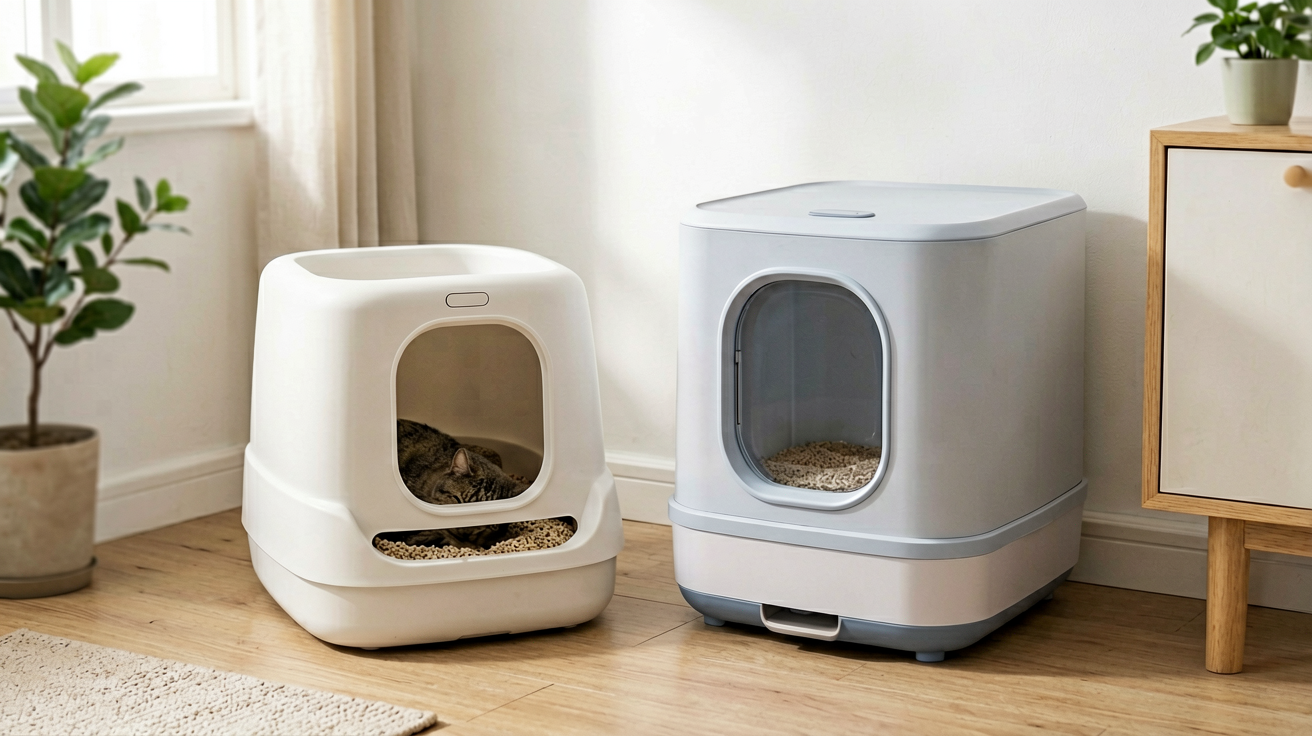
Best Automatic Cat Litter Boxes 2026: Are They Worth It?
A self-cleaning litter box rakes waste into a sealed drawer after your cat leaves, so you scoop far less often. They cost real money up front — often $300 to $700 — but for multi-cat homes or anyone who hates scooping, they can be worth it. Here's what the main models do, what to watch for, and who they're actually right for.
How they work
Most use a rotating globe or a rake. After the cat exits, a timer triggers a cycle that separates clumps into a lined waste drawer. You empty the drawer every few days to a week instead of scooping daily.
What to check before buying
- Safety sensors — the cycle must stop if a cat re-enters. This is the non-negotiable.
- Waste drawer size — bigger means fewer empties, matters more in multi-cat homes.
- Power and backup — some keep a memory of the cycle if power blips; others need a reset.
- Litter type — most require clumping litter; some are picky about brand.
Who they're right for
Multi-cat households, people with mobility or smell-sensitivity issues, and anyone traveling often. They're harder to justify for a single cat in a small apartment where a standard box is easy to manage — see our guide to litter-box problems if accidents are the real issue, not scooping.
Models worth a look (2026)
Litter-Robot 4 (Whisker)
The name most people know; app alerts for weight and cycles, handles multiple cats.
Check Price on Amazon Check Price on ChewyPetSafe ScoopFree
Crystal-litter rake model with disposable trays; lower entry price, recurring tray cost.
Check Price on Amazon Check Price on ChewyMeoWant / generic rotating
Newer rotating-globe styles at lower price points; check sensor reviews before buying.
Check Price on Amazon Check Price on Chewy🐾 Bottom line
If daily scooping is the problem, a self-cleaning box solves it — just confirm the safety sensors and the waste-drawer size fit your home. Prefer a low-tech start? Our cat litter comparison covers non-electric options.